What is the difference between ASL interpreting and captioning?
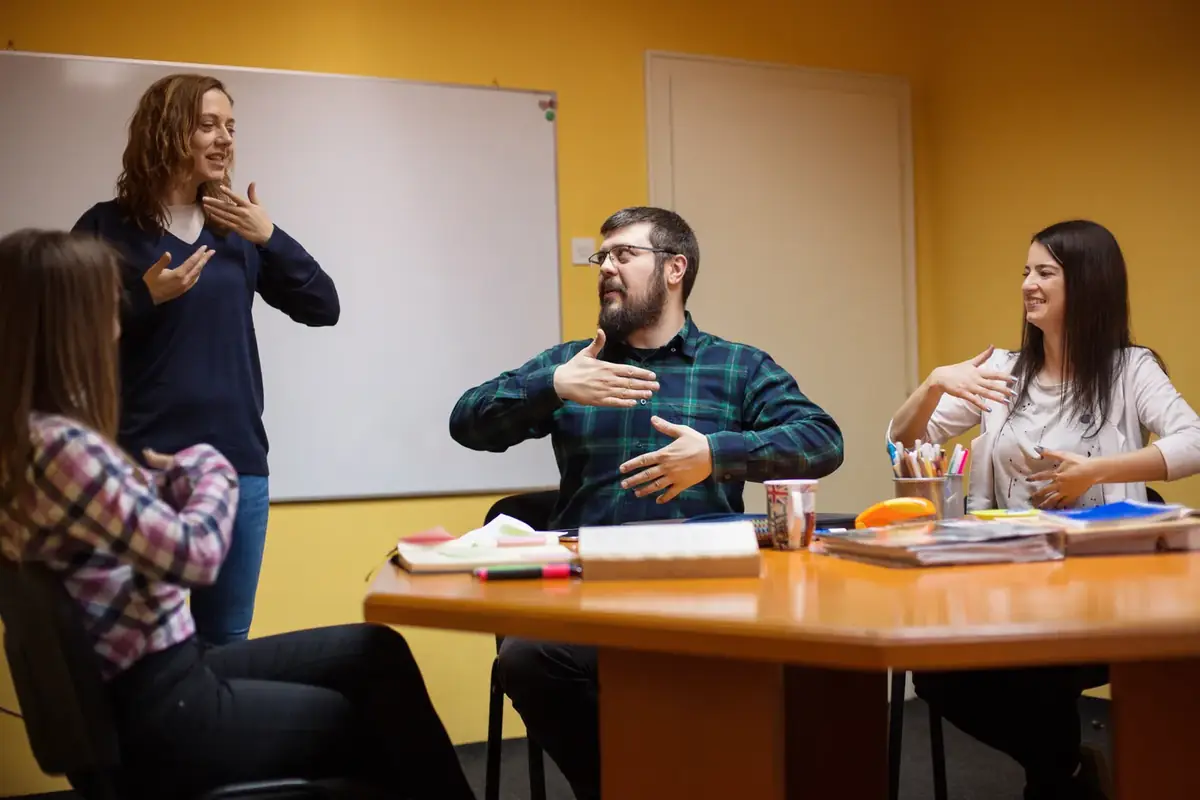
ASL interpreting conveys spoken content in American Sign Language, a full language with its own grammar, and is the preferred access for many Deaf attendees. Captioning displays spoken content as text, which serves hard-of-hearing attendees and others who do not use ASL. Many events provide both.
How many ASL interpreters does a session need?
For sessions longer than about an hour, or for demanding content, ASL interpreters work in teams of two and rotate. Short, simple segments may need one. We size the team for each session.
How early should we request ASL or CART?
As early as your program is set. More notice gives us a wider choice of interpreters and captioners for your subject. Our scheduling desk runs 24/7/365, and next-morning and same-day requests are routinely filled.
What do you need from us to prepare?
The agenda and session grid, slides and scripts, speaker names and titles, video clips and links, anything read aloud or sung, attendee requests, and a venue or AV contact. Preparation is the biggest factor in quality you control.
What is a Certified Deaf Interpreter?
A Certified Deaf Interpreter (CDI) is a Deaf interpreter who works with a hearing ASL interpreter to support communication with Deaf participants who have specific linguistic needs, or in settings where that team improves understanding.
Can you interpret for DeafBlind attendees?
Yes. We provide Pro-Tactile, tactile, and close-vision interpreting, matched to how each person communicates. Tell us early, because some arrangements take longer to set up.
Can you caption a virtual or hybrid event?
Yes. Remote captioners connect to your audio and write captions into Zoom, Microsoft Teams, Webex, or a caption display link for the stream and the room.
Can you provide ASL interpreters for languages other than English?
ASL interprets English. For events where spoken content is in another language, we coordinate spoken-language interpreters and ASL interpreters together, sometimes through relay. We also provide trilingual ASL–Spanish interpreters. Tell us the languages in your program.
Where do you provide ASL and CART?
Nationwide: interpreters and captioners in all 50 states, D.C., Puerto Rico, and Guam, with headquarters in the Denver metro area.
Does providing ASL and captioning meet the ADA?
The ADA requires effective communication, and ASL interpreters and CART captioning are common ways to provide it. We plan access with you, but we cannot give legal advice or guarantee compliance; ask your counsel about your obligations.