
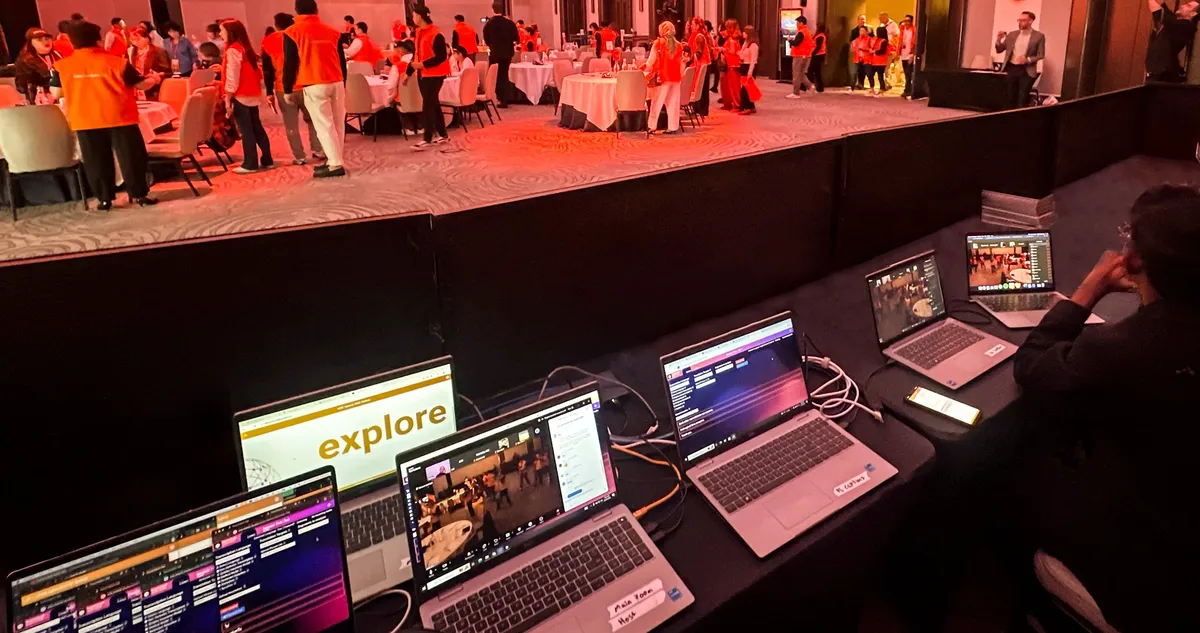
Hybrid: room and online
Part of the audience is in the venue and part is online.
- Booths and receivers in the room
- Language channels on your stream or meeting
- On-site technicians coordinating with your AV team
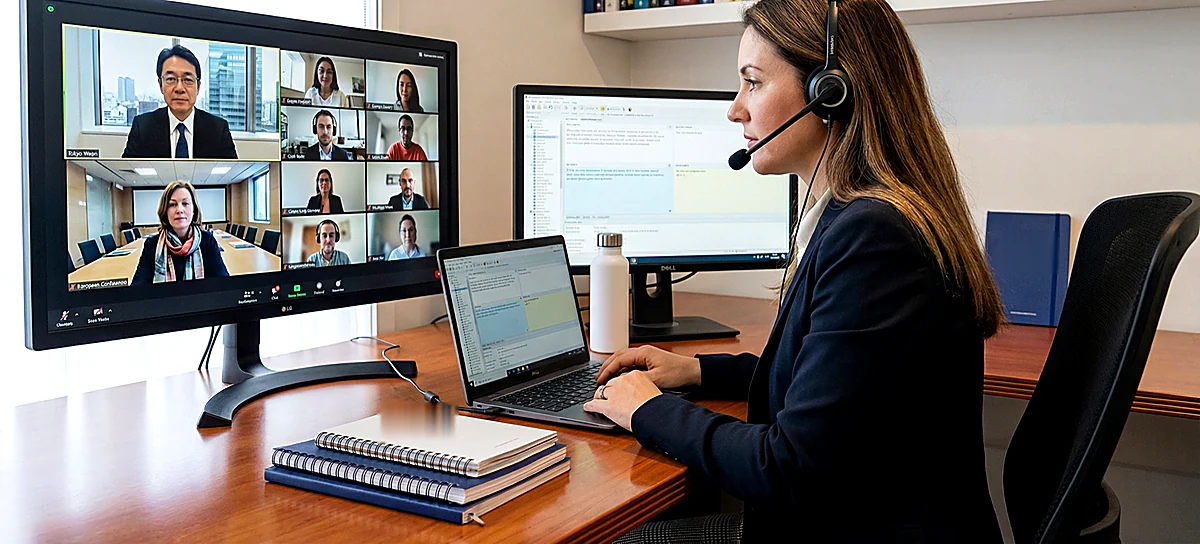
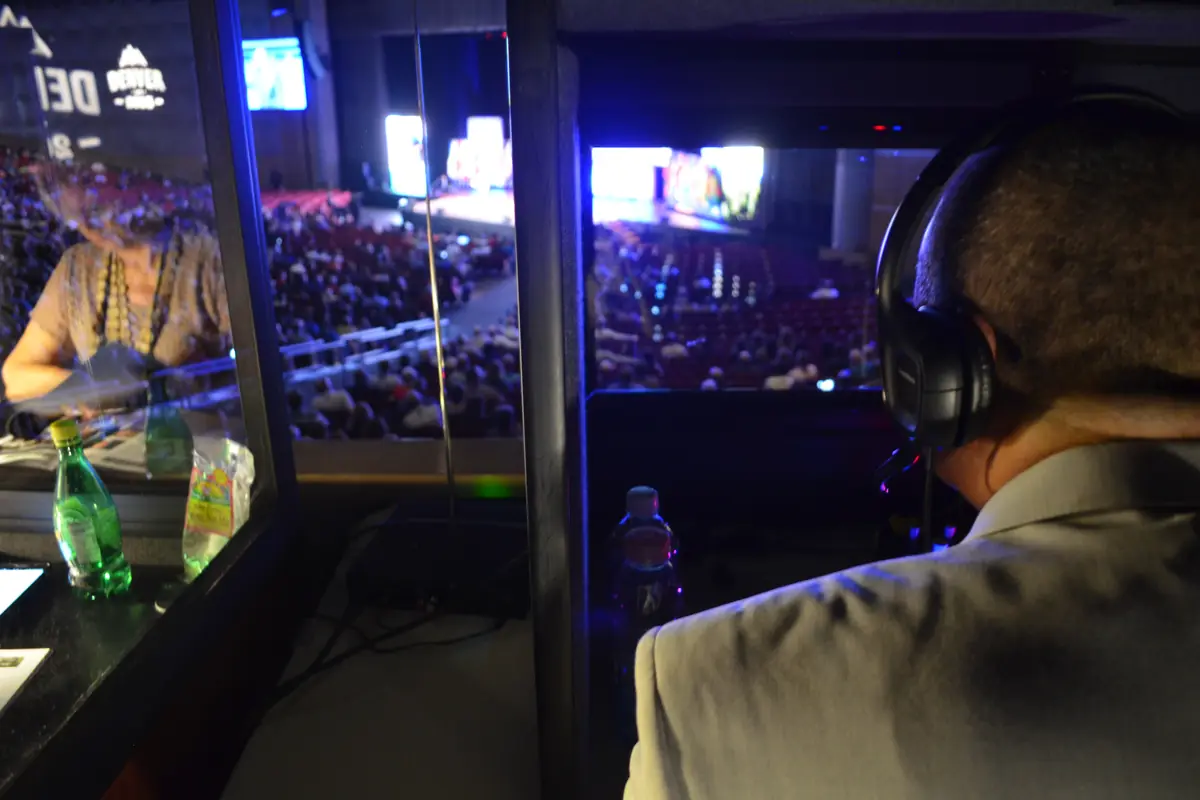
Remote & hybrid interpretation
Interpreters in booths or online, language channels for the room and the stream, backup connections, and a technician watching every feed. You run the event. We run the languages.

Part of the audience is in the venue and part is online.

Everyone joins remotely.

For a rare language or a last-minute addition.
Most remote and hybrid problems are solved before the event starts. This is the run of show we work to.
Request a quoteWhich platform, which license, how many people in the room and online, and which languages. We recommend booths, remote interpreters, or both.
Two interpreters per language, matched to your subject. Slides, agendas, and speaker names shared for preparation.
Remote speakers get guidance on headsets and quiet rooms, and we check their audio. Poor speaker audio causes most remote problems.
Language channels, host controls, room receivers, and the stream tested together, with an agreed plan if a connection drops.
Our technician monitors the booths, the remote interpreters, the room, and the stream, keeps the interpreted audio in step with the video, and coordinates handoffs with your AV team. We can run the platform’s interpretation controls for you.
Our remote interpreting standard
Remote removes the booth, not the discipline. Every remote interpreter we assign works this way.
We work on Zoom, Microsoft Teams, and Webex, and on dedicated interpretation platforms with a listener app for larger programs.

Speaker audio. Interpreters can only render what they can hear. We brief your remote speakers on headsets and quiet rooms, and check their audio in the technical rehearsal.
Tick off what you already have. Anything left unticked, we work out together.
Remote program we delivered
A federal security-studies center ran a three-week executive seminar online for 500 participants. Our remote interpreter teams kept terminology consistent across weeks of security and policy sessions.
Read the case studyQuestions
RSI is simultaneous interpretation delivered over the internet. Interpreters listen to the speakers through a meeting or interpretation platform and interpret in real time, and listeners select their language on the platform or in a listener app.
Yes. The same interpreters feed the venue receivers and the stream or meeting channels, so both audiences hear the same interpretation.
Interpreters work on wired internet with a backup connection and a partner on standby, and we agree a fallback plan with your team during the technical rehearsal.
Yes. Our technicians work with your streaming team to align the interpreted audio with the video, so online viewers do not hear the interpretation ahead of or behind the speaker.
Yes. We can take the role of assigning interpreters and managing language channels on Zoom, Microsoft Teams, or Webex, or work alongside your host. We agree roles before the rehearsal.
Yes. Remote interpretation audio is encrypted, we can work under your non-disclosure agreement, and your materials are handled under our ISO/IEC 27001 certified information security system.
Yes, as an option alongside human interpreters, for example to add languages to an internal or low-stakes session. For high-stakes, technical, or confidential sessions we recommend professional interpreters. Human vs. AI interpretation.
Zoom, Microsoft Teams, Webex, and dedicated remote interpretation platforms. Tell us which platform and license your organization uses, and we will confirm the setup.
It can be, because it removes interpreter travel and booth equipment. But it adds platform and rehearsal work, and quality depends on speaker audio. We will price both options so you can compare.
With a dedicated interpretation platform, yes: attendees open a listener app or web page and choose a language. They need headphones and a reliable connection, so we plan venue Wi-Fi with you.
A headset or external microphone, a wired or stable connection, and a quiet room. We send speakers short guidance and include them in the technical rehearsal where possible.
Next step
Share the dates, platform, languages, and how many people will join in the room and online. We reply with a plan and a quote.
Reviewed by Nisar Nikzad, CEO · Updated
We use cookies to run the site, to measure how it is used, and to see which ads and searches bring you here. You can accept all, keep only the necessary ones, or choose. Read our privacy policy.