Is simultaneous or consecutive interpretation better for my event?
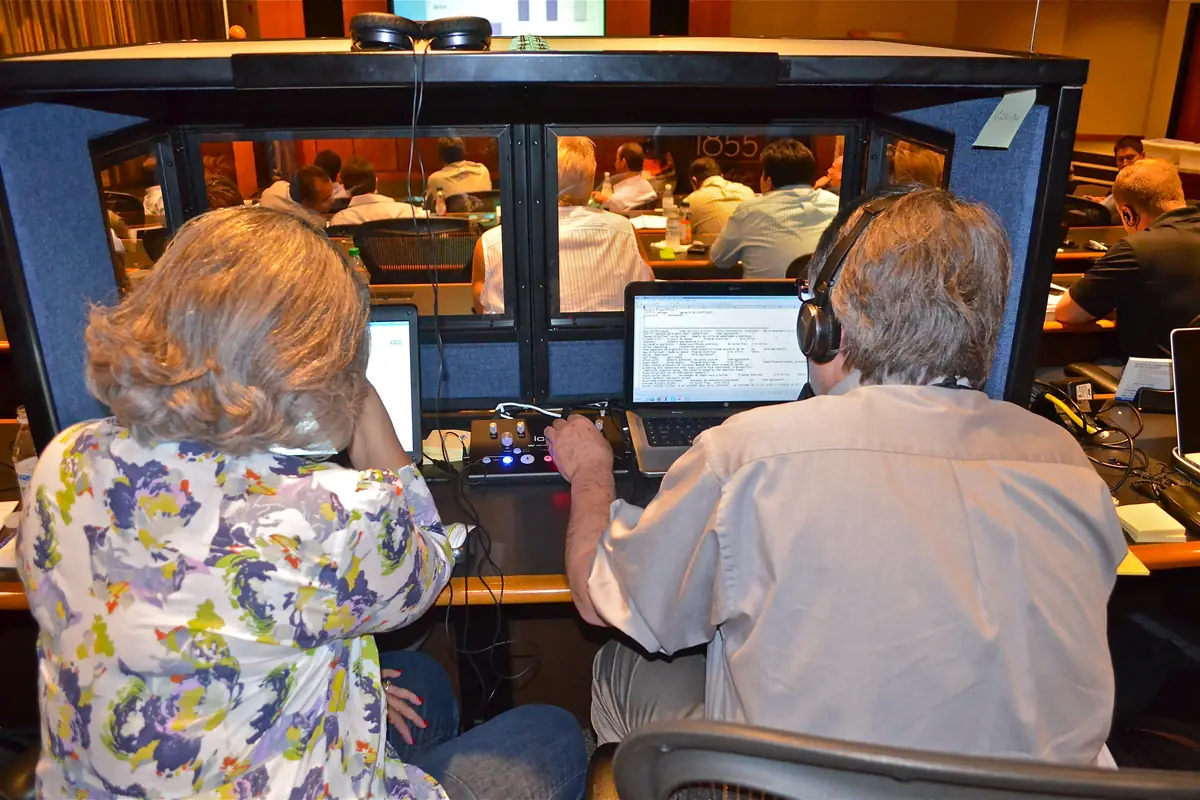
If the session has more than a handful of listeners, several languages, or a fixed schedule, choose simultaneous. If it is short, highly interactive, or held where a booth is impractical, such as a press conference or a walking tour, consecutive or a portable system is usually the better fit. Many events use both.
What is relay interpretation?
When no interpreter covers a language pair directly, one booth interprets into a shared language and the other booths interpret from that. For example, Japanese into English, then English into Portuguese. We plan relay into the channel layout when it is needed, and avoid it where direct coverage is available.
Do interpreters need our presentations in advance?
Yes, and it makes a measurable difference. Agendas, slides, speeches, speaker biographies, and lists of names and acronyms let interpreters research terminology before the event. Each booth should also receive any document read aloud during the session.
Can you interpret into and out of English in the same session?
Yes. Booths work in both directions when the program needs it, for example English and Mandarin in a bilateral forum, so both delegations can speak in their own language.
Can we record the interpretation?
Often, yes, but tell us before the event. Recording and publishing interpretation affects interpreter agreements and must be arranged in advance.